The world of Dark Souls is built upon layers of forgotten history, fading myths, and tragic cycles. At the very foundation of its lore lies the Age of Ancients, a timeless era that existed before fire, disparity, and the rise of the Lords. Understanding this ancient age—and the origins of the Lords who emerged from it—is essential to grasping the deeper meaning behind Dark Souls’ world, conflicts, and themes.
The Age of Ancients: A World Without Disparity
Before fire ever appeared, the world of Dark Souls existed in a state known as the Age of Ancients. This era was defined by grey fog, craggy stone arch-trees, and everlasting dragons. There was no concept of life and death, light and dark, heat and cold. Everything existed in a stagnant balance.
The Everlasting Dragons ruled this world not through tyranny, but through permanence. Their stone scales granted them immortality, making change impossible. In this age, nothing truly began—and nothing ever ended.
This unchanging nature is crucial: the Age of Ancients represents stagnation, a world without progress or decay.
The First Flame and the Birth of Disparity
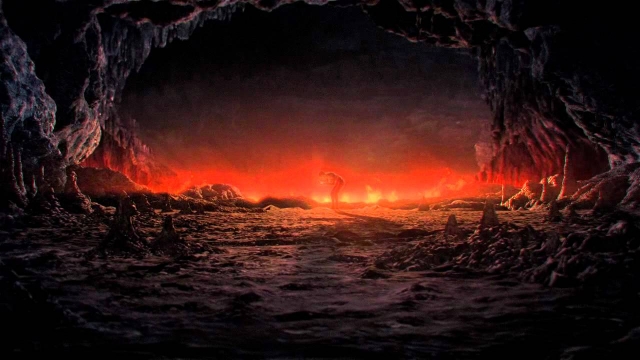
Everything changed with the appearance of the First Flame. With fire came disparity—light and dark, heat and cold, life and death. For the first time, the world was capable of transformation.
From the First Flame emerged powerful beings who discovered Lord Souls, fragments of immense power that allowed them to challenge the dragons and reshape the world. These beings would become the Lords of the new age.
The First Flame marks not only a physical change in the world, but a philosophical one. It introduced impermanence—and with it, suffering.
Gwyn, Lord of Sunlight
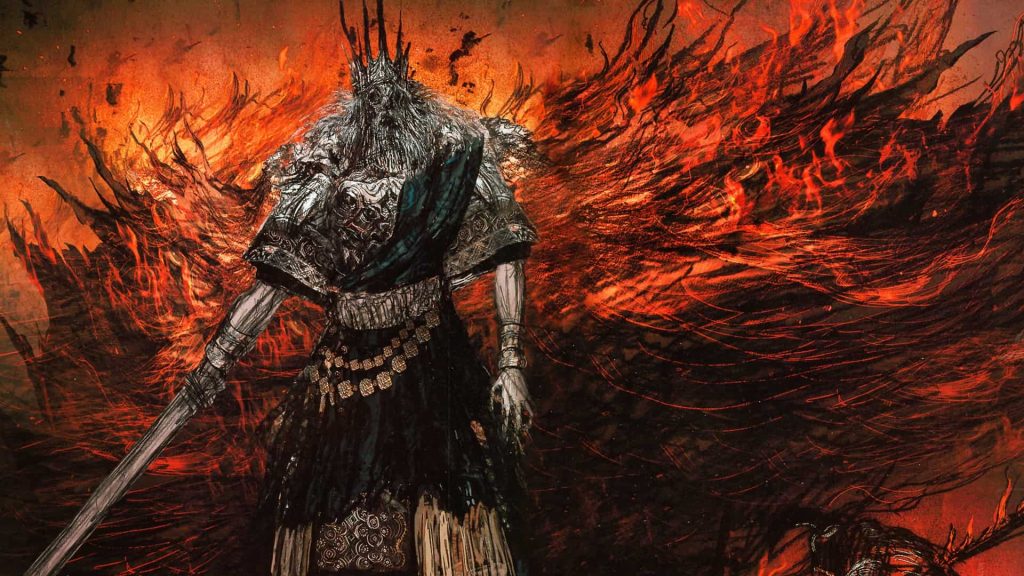
Among the Lords, Gwyn was the most prominent. He wielded the Lord Soul of Light and became the ruler of the Age of Fire. Gwyn led the war against the Everlasting Dragons, using lightning to shatter their stone scales.
Gwyn’s victory ushered in the Age of Fire, a golden era of gods, cities, and civilization. However, his fear of the coming Dark led him to commit the defining sin of the series: linking the First Flame to prolong his age.
This act bound the world to an endless cycle of fading fire and rebirth.
The Witch of Izalith and the Chaos Flame
The Witch of Izalith possessed another Lord Soul and sought to replicate the First Flame when it began to fade. Her attempt failed catastrophically, creating the Chaos Flame instead.
This disaster transformed Izalith and its people into demons, birthing a corrupted form of life fueled by chaos rather than order. The Witch’s failure represents one of Dark Souls’ central themes: the danger of resisting natural cycles.
Her tragedy shows that even gods cannot escape the consequences of defying the world’s balance.
Nito, the First of the Dead
Gravelord Nito was the embodiment of death itself. His Lord Soul granted him dominion over decay, disease, and mortality. Nito sided with Gwyn during the war against the dragons, spreading death throughout the ancient world.
While less prominent politically, Nito’s role is vital. He represents the inevitability of death—a force that exists regardless of fire or dark. Even gods fall to decay, reinforcing Dark Souls’ bleak view of existence.
The Furtive Pygmy and the Dark Soul
The most mysterious of the Lords is the Furtive Pygmy, who discovered the Dark Soul. Unlike the others, the Pygmy chose not to rule openly. Instead, the Dark Soul was divided and passed down to humanity.
This act created humans—and with them, the potential for the Age of Dark. Humanity’s connection to the Dark Soul makes them central to the fate of the world, even as they are oppressed and feared by the gods.
The Age of Dark is not inherently evil, but Gwyn’s actions ensured it would be viewed as such.
Why the Age of Ancients Still Matters
The Age of Ancients represents what the world once was—and what it can never return to. The Lords’ rise shattered that stasis, replacing it with cycles of fire, decay, and rebirth.
Every decision in Dark Souls is shaped by this ancient history. The player’s journey is not about saving the world, but choosing how the cycle continues—or whether it ends at all.
Final Thoughts
The origins of the Lords and the Age of Ancients form the backbone of Dark Souls’ haunting narrative. From the stillness of the ancient world to the desperate struggle to preserve fading fire, these events explain why Dark Souls is defined by tragedy, repetition, and quiet despair.
👉 If you are fascinated by the deep lore of Dark Souls and the ancient history that shaped its world, explore Dark Souls–inspired apparel, accessories, and collectibles at: dark-souls.store. Carry the legacy of the First Flame—and the shadows it cast—into the real world.
